
Definition of 'Cachupa'
National Dish of Cape Verde
 By Maxime Boudrias
Updated: July 28, 2024
By Maxime Boudrias
Updated: July 28, 2024
- Share
What is Cachupa?
Cachupa, the national dish of Cape Verde, is a hearty stew made with corn, beans, vegetables, meat, or fish, with a base of hominy, dried corn kernels. This corn is then simmered with red beans, onions, tomatoes, and peppers, often prepared the night before by soaking the corn and beans in cold water.
The type of meat used varies by region and includes beef, pork, chicken, as well as fish and seafood in coastal areas. Sausages and bacon are often added for richer flavor, and towards the end of cooking, vegetables like sweet potatoes, cassava, and kale are added to complete the dish.
The secret of cachupa lies in its slow cooking, with ingredients simmered over low heat for hours so the flavors meld perfectly. This hearty stew is often served with bread or rice, and leftovers eaten the next day are said to be even more flavorful.
There are two main types of cachupa: Cachupa Rica, which is richer and more expensive because it is full of meats, and Cachupa Pobre, which is more modest and based on fish. In Portuguese, "rica" means rich and "pobre" means poor, reflecting social differences through cuisine. The "poor man's cachupa" and the "rich man's cachupa" show how this dish is deeply rooted in the culture and language of the people.
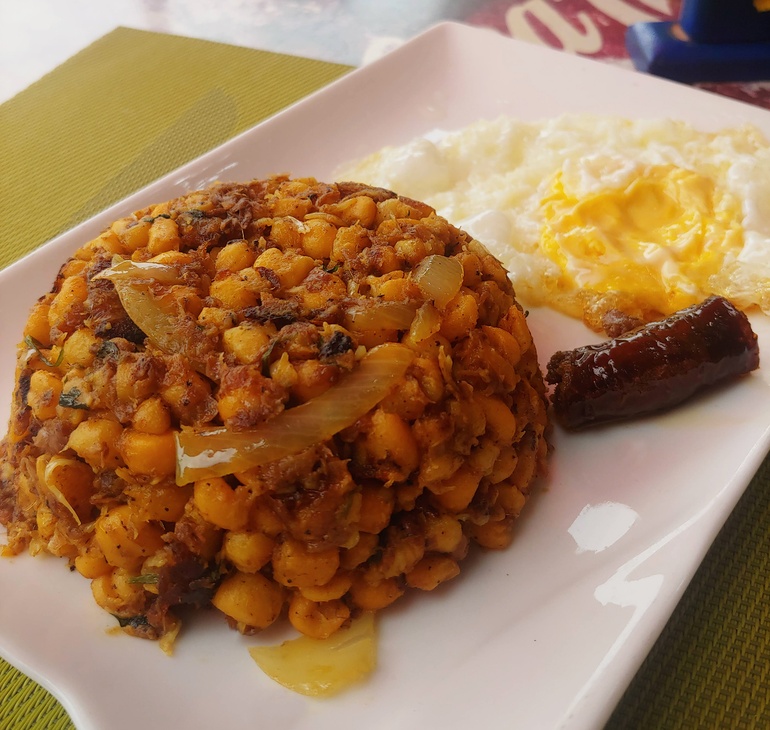
Cachupa Fresca refers to freshly prepared cachupa, while leftovers are often fried with onions until the liquid is absorbed or evaporated. Known as Cachupa Guisado, Cachupa Refogado, or Cachupa Frita, this version allows you to rediscover this traditional dish in another form. It is often served with a fried egg and local sausage, making for a hearty breakfast.
Example of Cachupa Use in a Sentence
« Will you prepare a cachupa guisado with the leftovers tomorrow morning? »
« There's nothing better than a cachupa fresca to get a taste of Cape Verdean cuisine. »
Word Origin
It is said that cachupa was born in Cape Verde during the time of slavery. The slaves would prepare a stew using the few ingredients they had on hand, such as corn, beans, and vegetables. The recipe was later enriched by adding fish or meat and imported products like potatoes and Portuguese sausage (chouriço).
Today, enjoyed by all, cachupa is often served at special occasions and family gatherings and has become a symbol of Cape Verdean culture.
Photo of Cachupa
 © Maxime Boudrias